
Unmanned Aerial Vehicles

Project Purpose
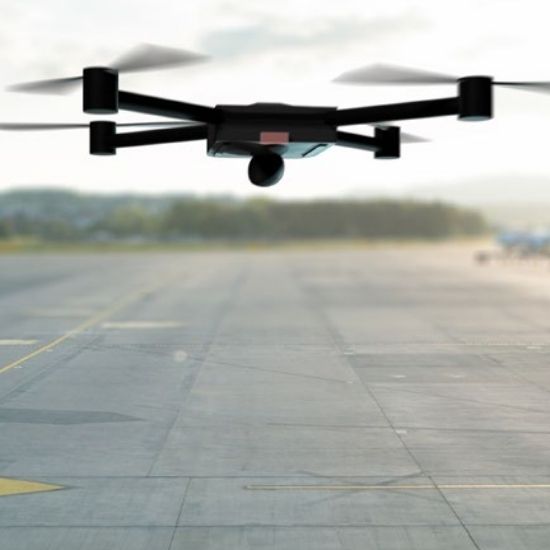
Cargo Drones have demonstrated the ability to provide low-cost, reliable and just-in-time delivery to difficult to reach areas. These aspects are ideally suited for the transport of medical goods for both routine public health needs as well as for humanitarian emergency preparedness and response. With 3.4 billion people living in such areas and disposable income rising, the need for rural access to reliable healthcare services is increasing.

Project Objective(s)
The project initiates the potential use of UAV in the Life Science and Medtech Airfreight industry.
Our aim is to collaborate with all members of the supply-chain to reduce the delivery time of pharmaceuticals using innovative solutions such as drones. And by this, understand the opportunities to link the traditional airfreight business model and the drone technologies.
Project Structure
WP1 Authority Endorsement of the IATA CEIV Certification Program – Identifying actions aimed at obtaining recognition of the IATA CEIV Pharma Program by authorities and regulatory agencies at the global, European, and national levels. The objective is to position the certification as equivalent to or integrated with the GDP certification in the airfreight industry.
WP2 Life Science Manufacturers (LSM) Review Group – Establishing a group of life science manufacturers to review the IATA CEIV Pharma Certification and provide feedback to enhance and update the program. In collaboration with the LSM Review Group, Pharma.Aero addressed several aspects to gain better insights into the industry’s needs and requirements.
WP 3 Program Assessment and IATA CEIV-compliant program – Investigating different aspects: Independent Validators’ profile requirements, consistency and control, light IATA CEIV capability check, training process, and checklist content. Two surveys were conducted within Pharma.Aero membership – one tailored for Life Science manufacturers and another one for non-LSM stakeholders – to gather insights on independent validators, focusing on potential enhancements to their profiles and competencies. The division of target companies into these two groups was essential, considering the varied industry sectors and differing opinions on pharmaceutical requirements. Some overlapping questions were included to assess potential divergent perspectives.
WP4 IATA CEIV Certification online Platform (ONE Source) – Raising awareness of the IATA ONE Source Program within the Pharma.Aero membership and assess its potential utility for the industry. In collaboration with an IATA representative, an interactive webinar was conducted to present the current and future features of the program and address queries from participants.
WP5 Communication to the Pharmaceutical Community – Pharma.Aero organized a dedicated webinar where two IATA representatives presented the IATA CEIV Pharma program. The aim was to discuss the future enhancements of the program and explore strategies to address the needs of the pharmaceutical industry.
WP6 Dissemination of IATA CEIV Knowledge – Highlighting the significance of various roles within companies involved in the pharmaceutical transportation process. The technical report detailed essential personnel, requirements and training pathways pertinent to the industry.
WP7 Publications – A comprehensive Technical Report was distributed among Pharma.Aero members in December 2023, marking the conclusion of the CEIV 2.0 project. This White Paper serves as the final documentation for the project.
PROJECT
SUPPORT AND
COLLABORATION.
- Pharma.Aero Board liaison and project leads: Edmonton International Airport and Sharjah Airport
- Project members: Astral Aviation, Astral Aerial Solutions, Pfizer, MSD, Johnson & Johnson, Zoetis, va-Q-tec and 30 members respondents to the survey (WP1)
- Project external support: HLA (the Humanitarian Logistics Association)
- Project manager (WP1 and 2): Ricardo Entz, Elemental-Future (external consultant)
- Project manager (WP3): Olivier Defawe, VillageReach (external consultant)