
Dual Temperature Acceptance

Relevance
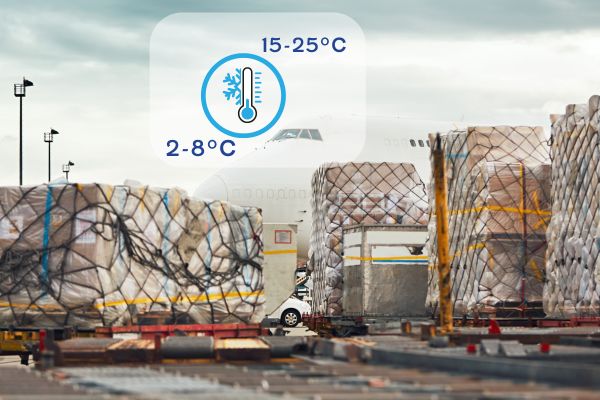
The pharmaceutical industry increasingly relies on passive packaging solutions that allow vaccines and other temperature-sensitive products to be transported under 15–25°C transportation conditions for a limited period, while still requiring 2–8°C cold chain handling upon arrival. Despite being an established and validated practice, current IATA Air Waybill (AWB) regulations do not support dual temperature declarations, creating operational inefficiencies, elevated risk, and unnecessary complexity across the air cargo supply chain.
Goal
By initiating this project, Pharma.Aero aims to develop an industry-endorsed position advocating for the formal recognition of dual temperature acceptance on the IATA AWB. This initiative seeks to improve shipment reliability, reduce risk, and expand access to critical pharmaceutical products, by defining clear handling rules, responsibilities, and standardised AWB specifications.
Supported by pharmaceutical manufacturers and Logistic Service Providers (LSPs), this Industry Opinion Paper sets out the case for investigating and suggesting Dual Temperature Acceptance within the IATA ecosystem. Its purpose is to inform structured engagement with IATA and contribute to the future evolution of Air Waybill (AWB) standards, so it reflects the realities of current pharmaceutical transport.

SPECIFIC OBJECTIVES
Evidence, Gap & Compliance Baseline Analysis (WP1)
Establish the factual, quantitative and qualitative evidence base and define the current regulatory and operational reality
Dual-Temperature Operating & Compliance Model Design (WP2)
Define a standardised, defensible dual-temperature operating and compliance model, translating WP1 findings into a structured, regulator-acceptable operational framework for airlines and pharma.
Market Validation & AWB Solution Design (WP3)
Use collected data and process requirements, and translate the needs into a practical AWB solution, including the required documentation handling and operational processes.
Industry Positioning, Endorsement (WP4)
Turn the work into a formally endorsed industry proposal suitable for IATA and regulators.
Project Key Takeaways
Dual-temperature handling is not a theoretical future requirement; it is an established operational reality across global pharmaceutical air cargo. Shipments routinely require a planned transition from CRT transport conditions to COL storage at destination, yet the current AWB framework does not recognise or support this scenario. This misalignment and the absence of clear standards, forces the industry to depend on informal workarounds that vary by lane, carrier and station, creating unnecessary risk and inconsistency.
To address this gap, the sector requires standardisation, both in how dual-temperature instructions are documented and in how they are communicated across the logistics chain. The proposed DTA framework offers one practical, compliant and operationally simple pathway to achieve this. It provides a structured mechanism for declaring the planned transition, ensuring that all parties receive clear, actionable instruction.
However, meaningful progress depends on formal industry endorsement and active engagement with IATA. Regulatory adaptation is essential to ensure that AWB standards, handling codes and operational processes evolve in line with contemporary pharmaceutical logistics. By aligning regulatory frameworks with operational reality, the industry can strengthen GDP compliance, reduce liability ambiguity, improve handling reliability and enable equitable access to high-quality temperature-controlled transport.
The path forward is clear: the challenge exists, the need is recognised, and the industry is ready. What is required now is coordinated action to bring Dual Temperature Acceptance into the formal structure of global air cargo standards.

PROJECT
SUPPORT AND
COLLABORATION.
-
Board Liaison: Liew Zhong Yao – Changi Airport Group
-
Project Leads: Gergely Szorcsik (Zoetis), Winta Getachew and Fabrice Panza (Etihad)
-
Project Members: Laetitia Chery (JAS Worldwide), Nina Heinz (MSC Air Cargo), Andreas Behnke and Julio Cabrera (Swissport)
-
Internal Strategic Expert: Frank Van Gelder – Pharma.Aero
-
Project Manager: Sara Van Lerberghe – Pharma.Aero
-
Project Expert: Navot Hirschhorn – Pharma GDP (external consultant)