
The newly released publication presents a cross-industry perspective on this operational challenge in pharmaceutical air cargo and proposes a practical framework to support future industry dialogue on Dual Temperature Acceptance.
Dual temperature handling has become an established operational reality across global pharmaceutical logistics. Many shipments are transported under Controlled Room Temperature (CRT, 15–25°C) conditions before requiring a planned transition to Cold (COL, 2–8°C) storage upon arrival. While this practice is increasingly common, particularly for passive packaging solutions, it is not yet formally reflected in current air cargo documentation standards.
In April 2026, Pharma.Aero has initiated a project – The Dual Temperature Acceptance (DTA) in Pharmaceutical Air Cargo – to examine the gap between operational practice and today’s regulatory framework. Drawing on industry surveys, expert interviews, and the operational experience of Pharma.Aero’s global network, the project’s findings are captured in the newly released Industry Opinion Paper. The publication analyses how dual temperature shipments are currently managed across pharmaceutical manufacturers, airlines, freight forwarders, ground handlers, and packaging providers.
The findings indicate that, despite widespread implementation, dual temperature handling often depends on informal, non-standardised processes that vary between organisations and trade lanes. These workarounds can introduce operational variability, create compliance challenges, and limit the ability to scale the process consistently across global networks.
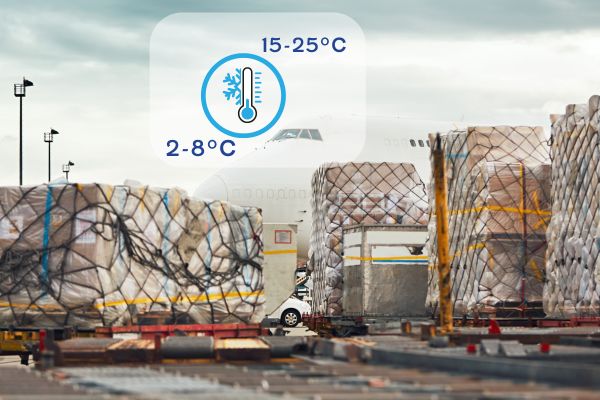
Developed through cross-industry collaboration between pharmaceutical manufacturers and logistics service providers, the paper outlines the need for greater standardisation and presents a practical framework designed to support structured industry dialogue on Dual Temperature Acceptance. The objective is to contribute to future discussions on how industry practices and documentation standards may evolve to better reflect the realities of contemporary pharmaceutical transport.
The more detailed, in-depth Technical Report of this project will be available for Pharma.Aero members only.
Pharma.Aero extends its sincere appreciation to all project participants whose expertise, operational experience, and commitment made this publication possible.
Not yet a member? Learn more about memberships and benefits.